What Is Code, Really?

Computers Are Incredibly Dumb
Seriously. For all the talk about artificial intelligence, computers are fundamentally machines that can only do one thing: follow instructions, exactly as given.
They don't guess. They don't improvise. They don't assume you meant something slightly different from what you typed. If you tell a computer to do something impossible or unclear, it doesn't figure it out — it just fails.
So how does a simple piece of writing — code — make a computer do anything useful? That's what we're exploring today.
What Code Actually Is
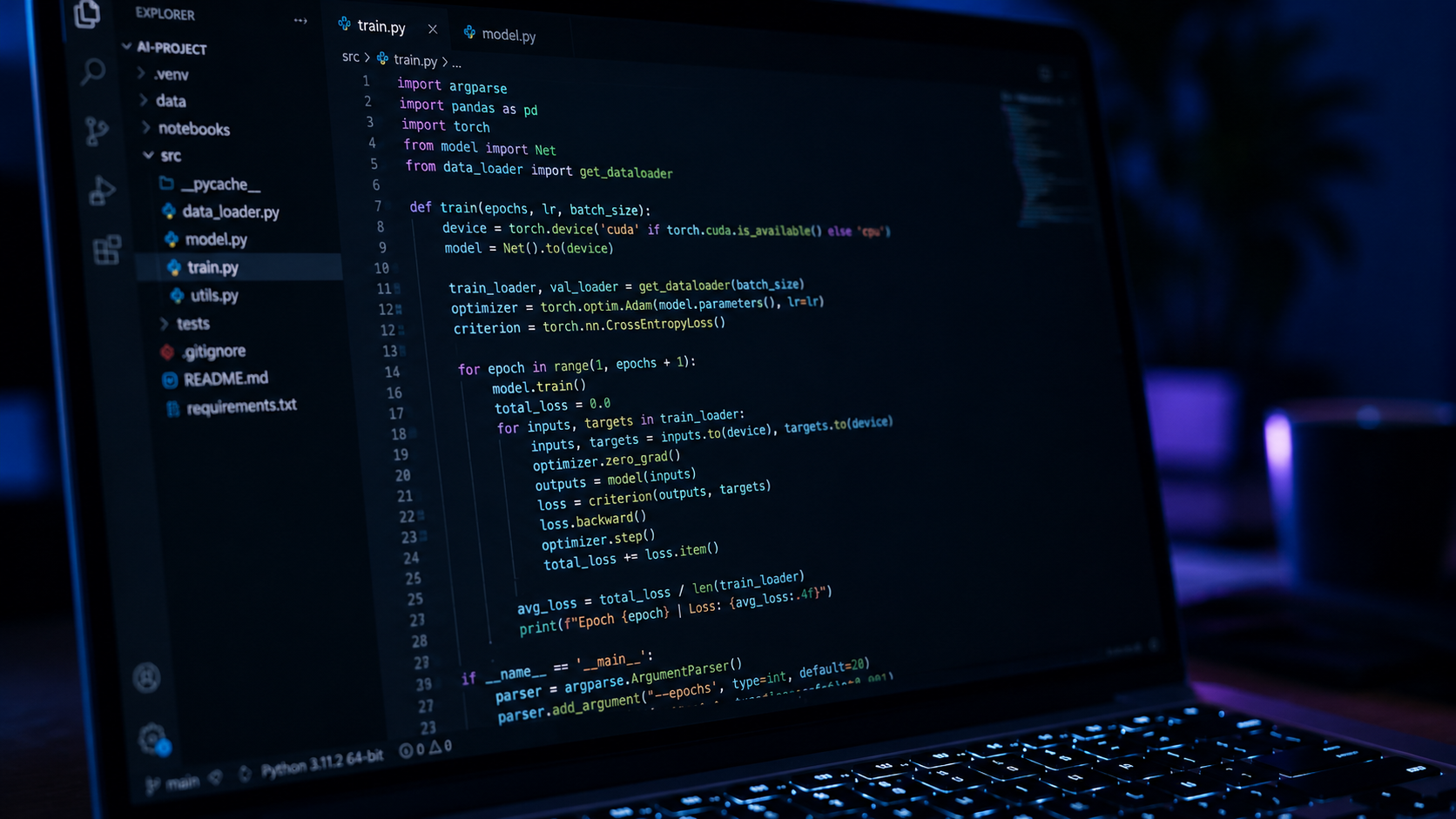
Code is a set of instructions written in a language that both humans and computers can understand (more or less).
Spoken languages like English or French are rich and flexible — full of metaphor, emotion, and ambiguity. "It's raining cats and dogs" doesn't confuse a human, but it would completely break a computer.
Programming languages are different. They're precise, structured, and unambiguous. Every symbol means something specific. Every instruction has a defined effect.
When you write code, you're essentially writing a very detailed recipe — one where every step must be clear enough that even the most literal-minded chef (the computer) can follow it without any interpretation.

The Journey From Code to Action
Here's something many people don't realise: computers don't actually "read" code the way we do. They ultimately only understand one thing — binary (1s and 0s, electricity on or off).
So how does your Python or JavaScript actually run? There's a translation process:
- ›You write code in a human-readable language (Python, JavaScript, etc.)
- ›A program called a compiler or interpreter translates it into instructions the machine understands
- ›The processor executes those instructions, billions of times per second
Think of it like this: you write a recipe in English, a translator converts it to a precise industrial kitchen format, and then the kitchen robots follow it exactly. The robots don't speak English — but the translator makes it work.
"Hello, World" — Three Ways
In coding tradition, the first program anyone writes is one that simply displays "Hello, World!". It's a rite of passage.
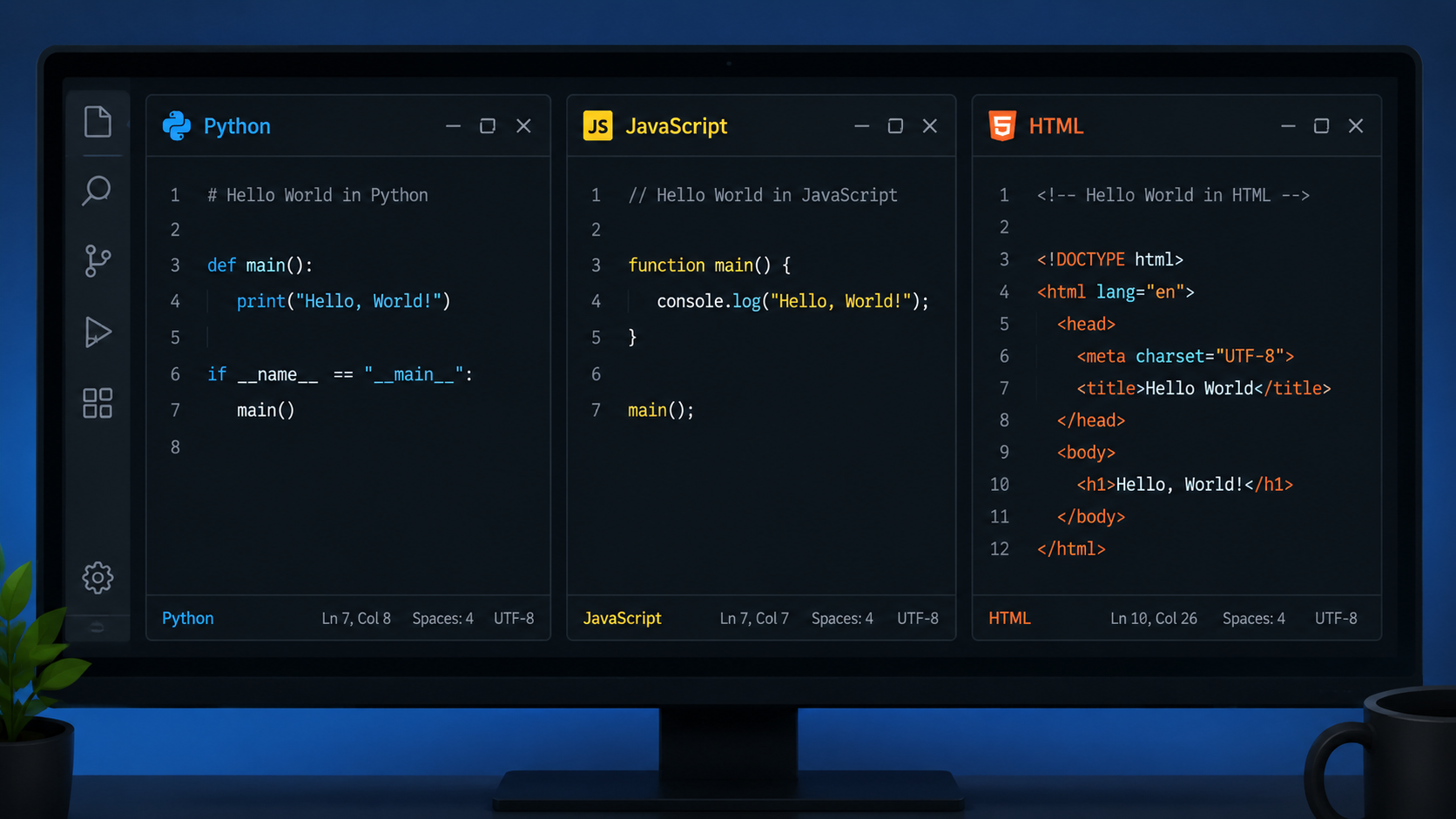
Here's the same idea in three different languages, so you can see how different the syntax looks — but the logic is identical:
Python
print("Hello, World!")
JavaScript
console.log("Hello, World!");
HTML (for a webpage)
<h1>Hello, World!</h1>
Three languages, three slightly different spellings — but the same idea. You're telling the computer: show these words to the person watching.
This is the core skill: not memorizing syntax, but understanding the idea, and then looking up how that idea is expressed in whatever language you're using.
Why Different Languages Exist
You might wonder: why don't we just have one programming language? The answer is that different languages are built for different jobs:
- ›Python — great for data, AI, and learning; reads almost like English
- ›JavaScript — runs in web browsers; makes websites interactive
- ›Swift / Kotlin — for iOS and Android apps
- ›C / C++ — for systems that need to run very fast, like games or operating systems
- ›SQL — for talking to databases (we'll get to this in Month 2)
You don't need to know all of them. Understanding one well teaches you patterns that transfer to all the others.
This Week's Practical: Hello, World — Three Ways
Option A — Use an online editor (no installation needed)
Go to replit.com or codepen.io (both free). Create a new project in Python or JavaScript. Type one of the examples above and run it.
Option B — Use an AI assistant
Ask an AI: "Write me a Hello World program in Python. Then explain every single word and symbol in it."
Then ask a follow-up: "Now write it in JavaScript. What's different, and why?"
What to notice:
- ›Which version felt most readable to you?
- ›What parts didn't make sense? Write them down — we'll come back to them.
- ›Did the AI's explanation make the code clearer, or more confusing?

💡 Key Takeaway: Code is just precise instructions. Computers are powerful but literal — they do exactly what you tell them, nothing more, nothing less. Your job as a coder is to think clearly enough to give perfect instructions.
Next week: AI can write code — but can it actually think? We'll explore the difference between human reasoning and AI pattern-matching, and why that difference matters enormously.
Try all three Hello World examples and share which one made the most sense to you. 👇