AI Can Code — But Can It Think?

Let's Get Something Straight
AI writing code is genuinely impressive. You can describe a program in plain English, and within seconds you have working code. Tools like GitHub Copilot, ChatGPT, and Claude can produce entire functions, fix bugs, and explain complex concepts.
So it's natural to wonder: does AI actually understand what it's doing? And does that question even matter?
The answer matters enormously — and once you understand it, you'll know exactly what role human thinking plays in a world of AI coding tools.
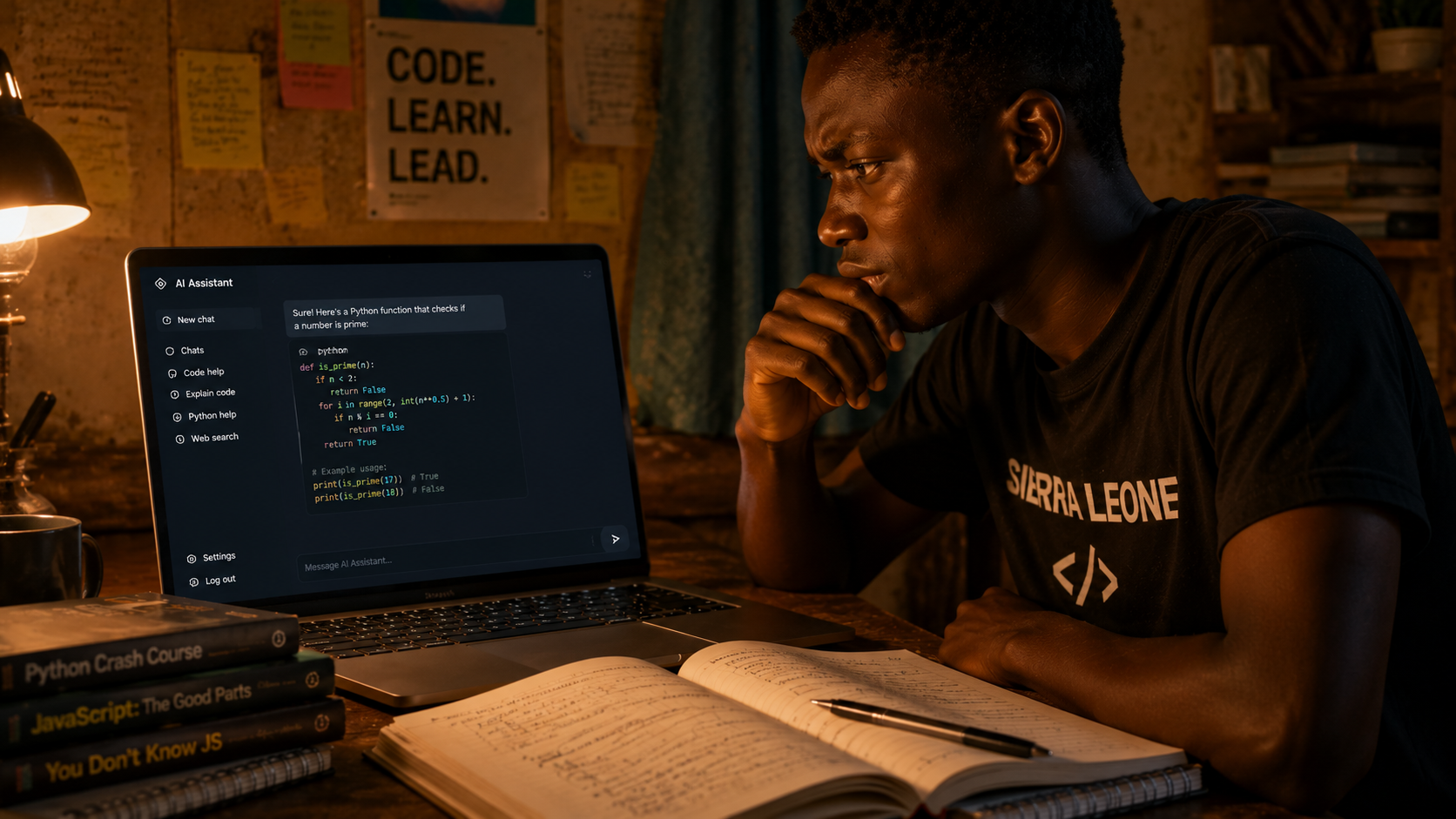
What AI Is Actually Doing
When an AI writes code, it's doing something called pattern matching at massive scale.
AI language models are trained on billions of lines of code and text from the internet. They learn statistical patterns: "when someone asks for X, the response usually looks like Y." They're extraordinarily good at this — good enough to produce code that looks correct and often is correct.
But here's the crucial thing: the AI doesn't know what the code does. It doesn't run it in its head. It doesn't understand the system it will be part of. It's predicting what tokens (words and symbols) should come next based on everything it's seen before.
It's like a student who's read thousands of cassava leaf recipes and can write a very convincing-looking recipe — but has never actually cooked, and can't tell you whether the dish will taste right or burn the pot.

Where AI Gets It Wrong
Because AI is pattern-matching rather than reasoning, it fails in predictable ways:
- ›Edge cases — it doesn't naturally think "what if someone enters nothing?" or "what if this list is empty?"
- ›System context — it doesn't know your codebase, your users, or your business rules
- ›Hallucinations — it confidently uses functions or libraries that don't exist
- ›Security — it often writes code that works but has vulnerabilities it doesn't flag
- ›Design — it solves the specific request but doesn't consider whether it fits the bigger system
These aren't random failures. They're gaps that exist precisely because AI doesn't think — it predicts.
What Human Thinking Adds
Here's where you come in. Human reasoning does something AI currently cannot: it understands context, intent, and consequences.
When a human engineer approaches a problem, they ask:
- ›What is this actually supposed to do for a real person?
- ›What could go wrong, and how should we handle it?
- ›How does this fit with everything else in the system?
- ›Is this the right approach, or are we solving the wrong problem?
These questions require understanding the world — not just patterns in text. They require judgment. And right now, that's a distinctly human skill.
The best developers today aren't racing against AI. They're using AI as a fast, tireless assistant — while applying their own reasoning to make sure the output is actually good.
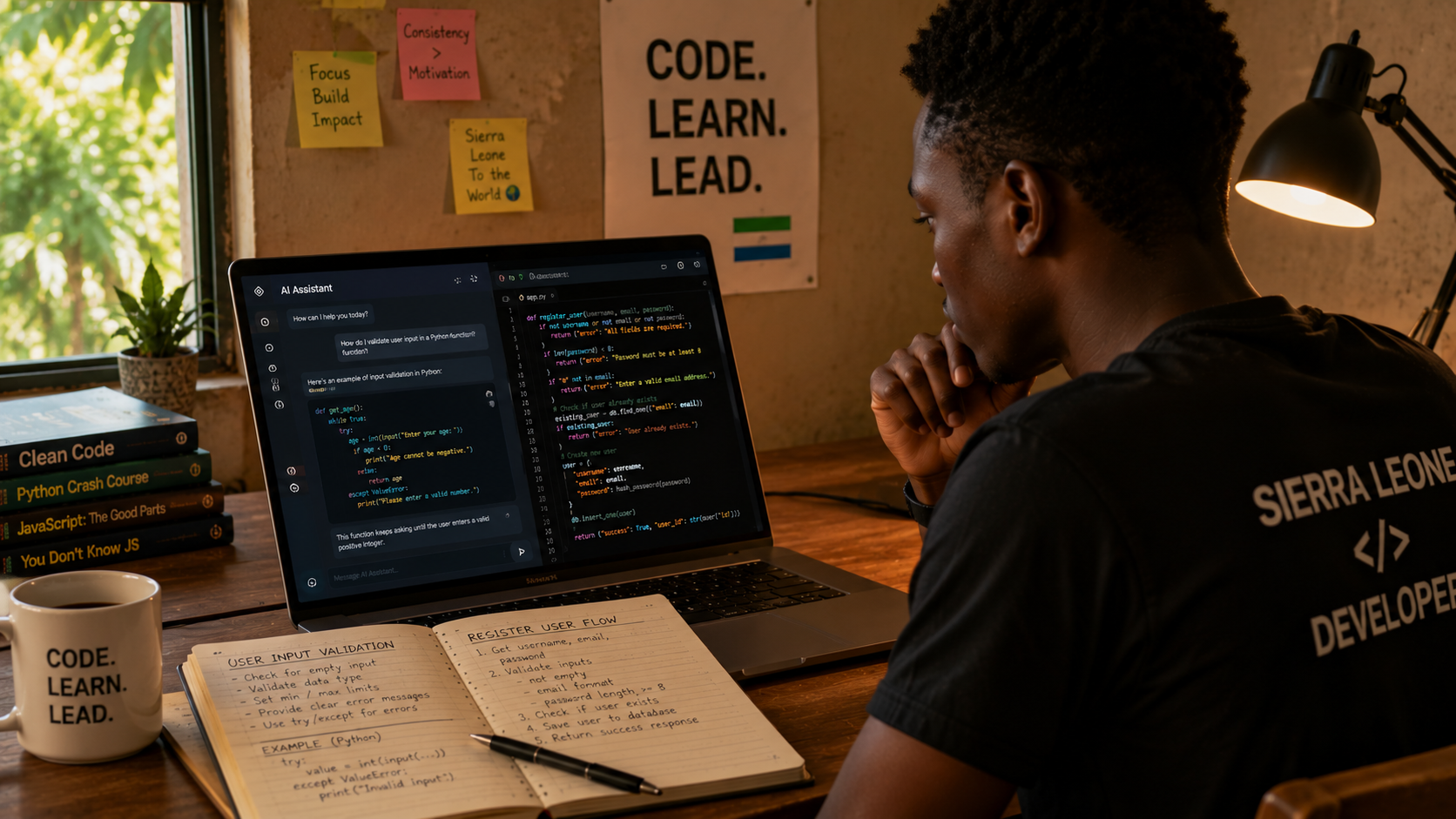
The Human + AI Workflow
Here's what a modern coding session actually looks like when you combine human thinking with AI tools:
- ›Human: Defines the problem clearly and thinks through the design
- ›AI: Generates a first draft of the code quickly
- ›Human: Reviews the code, thinks critically, asks "what could go wrong?"
- ›AI: Refines based on feedback
- ›Human: Tests it, catches the edge cases, makes the final judgment call
Notice that the human is in control at every key decision point. The AI accelerates the typing; the human does the thinking.
This Week's Practical: Catch the AI's Mistakes
Setup: Open any AI assistant (ChatGPT, Claude, Gemini — all work).
Step 1: Give the AI a coding task.
"Write a program that asks a student for their name and 5 test scores, then calculates and prints their letter grade (A, B, C, D, or F)."
Step 2: Read the output carefully. Don't just check if it looks right. Ask yourself:
- ›What happens if someone types their name wrong?
- ›What if they enter a score above 100 or below 0?
- ›What if they enter a word instead of a number?
- ›What does the grading scale assume? Is it the right one?
Step 3: Test the AI's code. Run it on replit.com. Try entering bad inputs on purpose. Does it crash? Does it give a wrong answer silently?
Step 4: Ask the AI to fix what you found. Tell it exactly what went wrong. Notice: your human observation of the flaw is what guides the fix. The AI couldn't catch its own mistake — you had to.
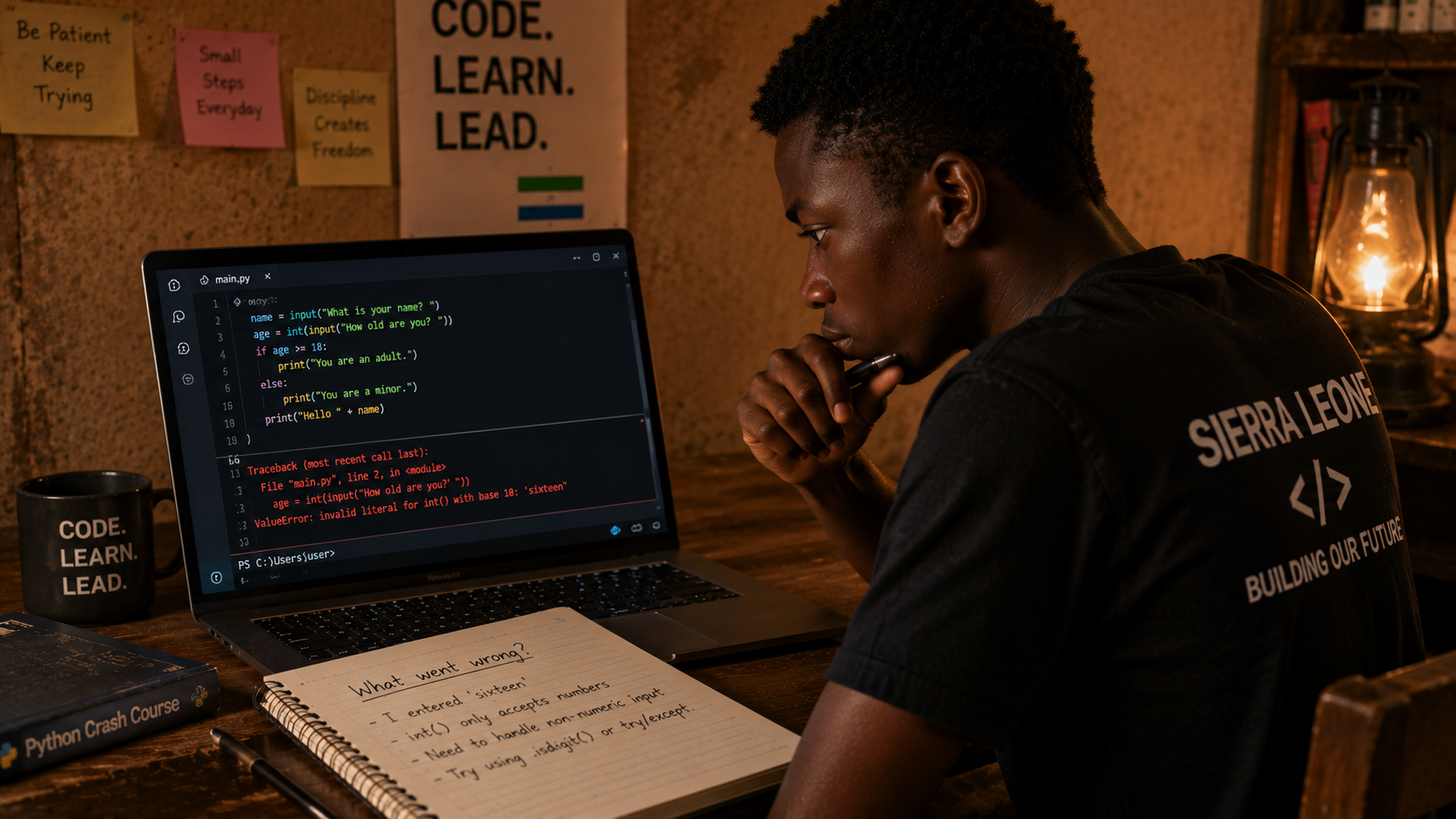
Reflection question: In your notes, write — what reasoning did you apply that the AI skipped?
💡 Key Takeaway: AI is a pattern-matcher, not a thinker. It writes fast but it doesn't reason about edge cases, system context, or consequences. Human judgment is what turns AI output into reliable software.
Next week: We put everything together with your first real project a working to-do app, built with AI as your coding partner. You'll see exactly how the human-AI workflow plays out in practice.
Share your findings: what mistake did you catch that the AI missed? 👇